Introduction
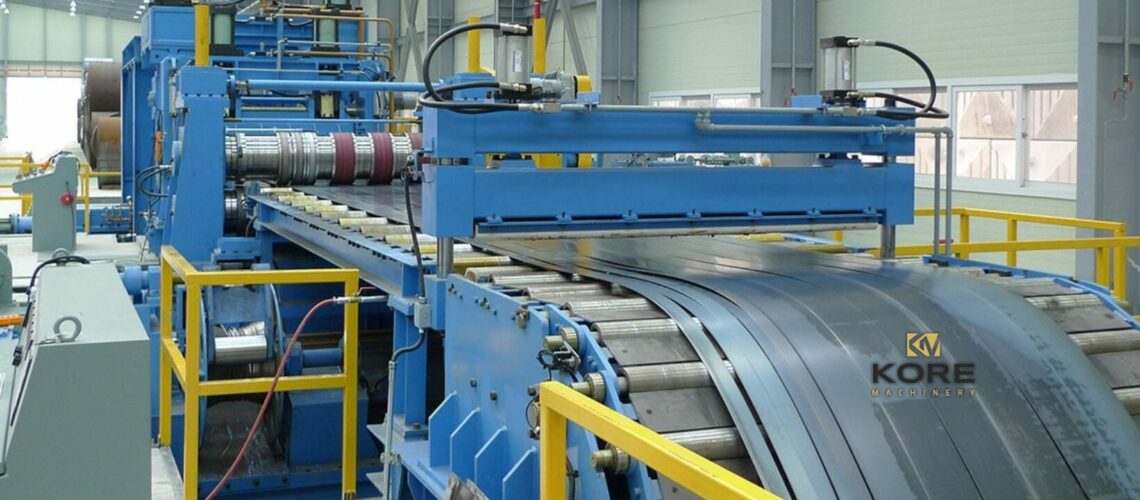
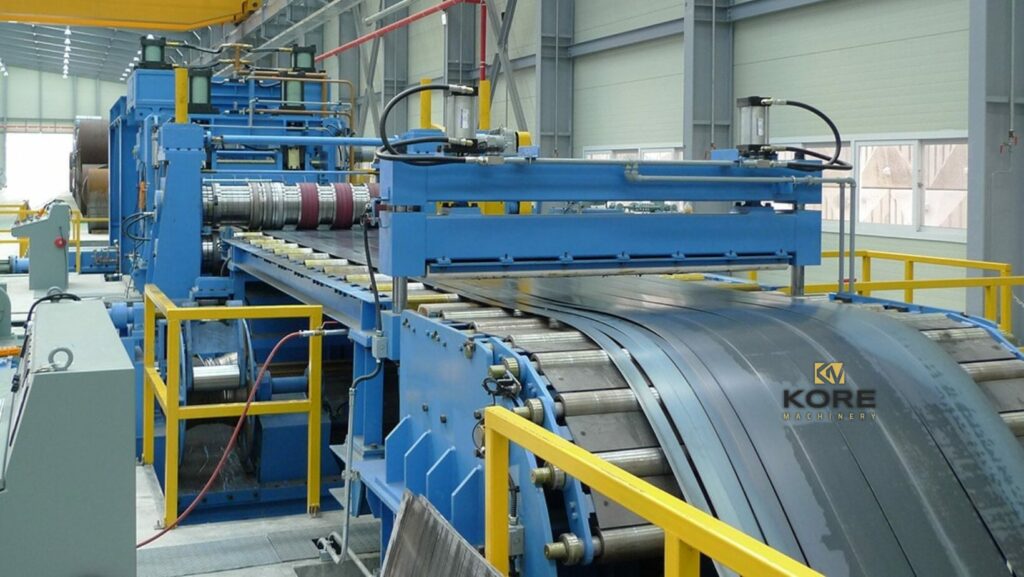
Slitting lines are precision coil processing systems designed to convert wide master coils into narrower strips with consistent dimensions. This overview explains how slitting lines operate and why system design directly impacts strip quality and production efficiency.
What Happens During the Slitting Process
Slitting is the controlled cutting of a master coil into narrower strips. The process includes coil loading, stabilization, precision cutting, tension control, and recoiling. Each stage must operate in balance to maintain accuracy and minimize scrap.
Step 1 – Coil Loading and Preparation
A master coil is mounted onto an uncoiler and fed into the system. Proper preparation ensures stable feeding, reduced edge damage, and consistent tracking.
Step 2 – Material Stabilization and Tension Control
Leveling and tension systems regulate strip movement and maintain flatness. Controlled tension prevents wandering and protects surface finishes.
Step 3 – Precision Slitting
Rotary knives divide the coil into specified widths. Knife alignment and system rigidity ensure repeatable accuracy, even at high speed.
Step 4 – Strip Separation and Scrap Handling
Separated strips are guided safely while trim scrap is removed, improving safety and production flow.
Step 5 – Recoiling Finished Strips
Recoiling maintains strip tension and produces uniform coils ready for downstream processing.
Why Precision Matters
Consistent strip widths reduce downstream issues and improve throughput while minimizing waste.
Materials Commonly Processed
Modern slitting lines process stainless steel, aluminum, cold-rolled, hot-rolled, and coated metals.
Production Efficiency Benefits
Efficient slitting improves workflow predictability, reduces scrap, and supports consistent output.
Conclusion
Understanding slitting fundamentals helps manufacturers evaluate equipment and align processing capabilities with production goals.